Friday, 4 October 2024

This blog has a new address online

I am relaunching the Chartist Ancestors Blog on a new platform, which means a change to the website address. From this point on, you should be able to find it at chartistancestors.blog.

This change does not affect the main Chartist Ancestors website, which stays at chartistancestors.co.uk. But it does mean that all future blog posts will be at the new address.

The version of the blog that you are on at present will remain up, but won't be updated.

Mark Crail
Chartist Ancestors
14 October 2024

Thursday, 3 October 2024

Women and Chartism: All About That Place 2024

I really enjoyed talking about 'Women and Chartism' for All About That Place 2024. This is the second year I've recorded a short video for the event, which takes place entirely online and has more speakers on a wider range of topics than any history conference I can think of.

Organised jointly by the Society of Genealogists, Society for One Place Studies, British Association for Local History and Genealogy Stories, there were something like 140 ten-minute talks - all of them free of charge. It is fantastic event, and I hope it continues to run in future years.

The opening screen for my presentation includes the only known portrait of Susanna Inge, a leading light in the City of London Female Chartist Association.

Here's my talk for AATP2024. 


One of the great advantages to an online event of this sort is that talks can remain online for as long as the speakers are happy for them to remain. I see no reason why my own talk should not stay up available for the long term.

If you've watched my video and want to find out more about Chartism, here are a couple of links to the main Chartist Ancestors website that you might find useful:

Other AATP2024 talks are available through the Society of Genealogists YouTube channel and via their Facebook Group.

Last year I talked at AATP2023 about the Newport Rising of 1839, a key event in Chartist history. You can watch the video here...


Tuesday, 24 September 2024

On the Elland Female Radical Association and the demography of women in Chartism

Dorothy Thompson was the first historian to write about Elland’s Female Radical Association, but the story of them rolling the local poor law commissioners in the snow before sending them on their way has ensured them at least a mention in pretty much every subsequent account of women in Chartism ever written.

I have now added an article on them to the website which focuses on their opposition to the New Poor Law, and their run-ins not just with the unfortunate poor law guardians but with the London press.

Monday, 9 September 2024

Chartism Day 2024: in praise of Dorothy Thompson

Chartism Day has now been in existence for two or three times as long as Chartism itself was around (depending on how you define being around). But every year brings new research and fresh ideas. This year’s event, which took place at the University of Reading at the weekend was no exception.

I have now written a full report (with photos) for the Society for the Study of Labour History website. You can read it here.

Saturday, 31 August 2024

The rise and fall of Robert LeBlond

Robert LeBlond was a leading member of the National Charter Association in its final days, and an important link with middle class reform organisations. But his real interest was in secularism - still a quite shocking idea for many people.

LeBlond supported the secularist cause with the wealth generated by his print business, and promised to do more. But then things went badly wrong for him.

Although a little-known figure in the history of Chartism, I’ve been researching his life story - and, thanks to his three times great granddaughter and her assiduous work on family history, have even been able to include a photograph with the biography I’ve put together for Chartist Ancestors.

Give it a read.

Monday, 19 August 2024

Irish radicals added to the Chartist Ancestors Databank

I have added 143 new names to the Chartist Ancestors Databank, taking the total number of those included to 14,523.

This latest batch includes a significant number of Chartists of Irish origin, and is made up of three groups.

Thursday, 8 August 2024

The Chartists on the hill: William Lovett, George Jacob Holyoake and Karl Marx in Highgate Cemetery

Highgate Cemetery must be the most famous burial ground in England. This week I paid a visit in search of William Lovett, secretary to the London Working Men’s Association, author of the People’s Charter and more besides. I visited, by chance, just a day before the anniversary of Lovett’s death on 8 August 1877, climbing Highgate Hill to get there before passing through the huge stone gatehouse to buy the £10 ticket that gave me access to the cemetery proper. 

Wednesday, 17 July 2024

Feargus O’Connor - last of the gentleman radicals

Feargus O’Connor permeates Chartist Ancestors as he permeated Chartism itself. The two can barely be separated. But up to now I haven’t written a biography of the all-important Chartist leader - ‘The great I AM of radicalism’, as a frustrated William Lovett dubbed him.


That has now changed, and I have managed to pull something together that tells his story, beginning with a childhood spent among a most remarkable family in Cork, and ending with his committal to a lunatic asylum in the early 1850s.

The full version of the sketch of O’Connor shown right can be found here. But I was especially pleased to discover that there are surviving portraits of his Irish nationalist uncle Arthur, eccentric father Roger, and adventurous elder brother Frank - or Francisco, as he is better known to history, quite a tale in itself.

O’Connor led a fascinating life. A family inheritance enabled him to live as an independent gentleman radical (perhaps one of the last of the breed), and for a decade he pretty much embodied Chartism, leading it on through good times and bad with unflagging energy.

Yet I must admit there is also much not to admire about him. 

You can read more about the man without whom Chartism might never have been more than a footnote in the history books at:


Thursday, 11 July 2024

Kennington 1848: the women in white bonnets, the man in the dustman's hat and the coachman

The daguerreotype images of the famous Chartist Kennington Common meeting on 10 April 1848 have fascinated historians since they first came to light in the Royal Collection in the mid-1970s. Though not the first crowd photographs, as is sometimes claimed, they are the first such pictures of a protest meeting, and they provide a real glimpse into this historic moment in time.

Professor Fabrice Bensimon, historian of the nineteenth century and a noted expert on the Chartist movement at Sorbonne Université, has spent many hours pouring over the two surviving daguerreotypes in an attempt to shed light on the people who made up the crowd. His research appears in a recent article in the Journal of Victorian Culture1.

Friday, 5 July 2024

A slightly new look for Chartist Ancestors

You may notice that the Chartist Ancestors website has had a bit of a makeover. To be honest, I hope it isn't too noticeable as I was quite happy with the look and feel of it as it was.

However, the theme (design template) I was using is now being flagged by Wordpress as having a 'known vulnerability', so to be on the safe side I have switched to a new one. 

Saturday, 29 June 2024

Register for Chartism Day 2024


Registration is now open for Chartism Day 2024. This year’s conference takes place at the University of Reading on Saturday 7 September - and, as ever, all are welcome.

Professor Mike Sanders will be giving the keynote address on Disraeli, Young England and the Chartists, and there are loads of other great speakers.

In addition to the speakers programme, there will be a ‘silent auction’ for artwork and other goodies kindly donated by graphic artist Polyp - you may have seen his fantastic Peterloo and Tom Paine graphic novels, and he has a new one called COURAGE! coming out on the fight for the franchise.

Find out more at this link…

The full programme and a registration button can be found Here on Eventbrite.


Sunday, 23 June 2024

Emma Miles: the life of a female Chartist activist

Born in 1819, Emma Miles was one of a number of female activists in their early twenties who made the City of London Female Chartist Association something of a media sensation with their unashamed views on political reform and the place of women in public life.

The daughter of a well known London clockmaker (whose work today sells for thousands of pounds and can be found in museums), Emma dismissed the very idea that women should be content to be ‘an ornament to the domestic hearth’ and declared that she would remain a Chartist to the end of her life.

Emma would later marry a fellow Chartist activist and emigrate to Ohio.

I’ve been digging into Emma’s story a little after identifying her with some certainty in the baptism and marriage records to be found on Ancestry (others sharing her name being too young or too old, too far from London, or too married). 

Frustratingly, however, I have not yet managed to identify the right Mary Ann Walker in the records. 

Emma’s life story can be found here.

Thursday, 20 June 2024

In search of Tothill Fields Bridewell

Up in London today I thought I’d have a look at what remains of Tothill Fields Bridewell - the Westminster prison where the Chartist leader Ernest Jones was imprisoned in 1848 for sedition.

Here, just a five-minute walk from what is now Victoria Station, he and other Chartist prisoners refused to pick oakum and were put in solitary confinement on a diet of bread and water. Amid unsanitary conditions, and an outbreak of cholera in London, Jones was lucky not to share the fate of Joseph Williams and Alexander Sharp, two imprisoned Chartists who did not live to complete their sentences.

Monday, 27 May 2024

Palmerston and the publican: a tale of betrayal

Plans for an armed rising in London during the summer of 1848 were compromised from the start. Infiltrated by police informers and hopelessly ill-prepared, the Chartists and Irish Confederates who planned to seize the capital and spark a revolution never stood the slightest chance of success.

A slim folder of Home Office correspondence now in the National Archives reveals just how a capable and experienced police officer was able to keep tabs on the conspirators by entrapping a Seven Dials publican into betraying his comrades for small financial reward.

Friday, 3 May 2024

Book review: Workers of Their Own Emancipation: Working-Class Leadership and Organisation in the West Riding Textile District, 1829-1839

Workers of Their Own Emancipation: Working-Class Leadership and Organisation in the West Riding Textile District, 1829-1839, by John Sanders (Breviary Stuff Publications, 2024)

When in the autumn of 1830, two delegates from the National Association for the Protection of Labour arrived in Halifax to promote the union’s cause, they encountered an immediate problem. Having called a public meeting, they were unable to find even a single local working-class radical able to take the chair - and through want of local leadership, their cause foundered and failed in the town.

In the years that followed, everything changed. By October 1838, when the radicals of the West Riding met on Peep Green to elect delegates to the First Chartist Convention, all but a handful of the 21 speakers were local working men – among them Lawrence Pitkethly and George Barker of Huddersfield; Abram Hanson of Elland; Peter Bussey of Bradford; George White of Leeds; Thomas Todd of Dewsbury; Samuel Dickenson of Almondbury; Robert Wilkinson and William Thornton of Halifax; and Joseph Crabtree of Barnsley. And in the towns they represented, there were many other capable working class leaders able to articulate their well-developed political ideas in writing and on platforms, and to organise their friends and neighbours in support of a wide variety of causes affecting their lives.

Wednesday, 17 April 2024

COURAGE: Luddites-Peterloo-Chartists-Suffragettes

If like me you were a fan of graphic artist Polyp’s graphic novels about Peterloo and Tom Paine, you will be delighted to know that he is currently working on a new project - and it includes Chartism.

COURAGE: Luddites - Peterloo - Chartists - Suffragettes is described as, ‘An intense verbatim account of the shockingly violent struggle for the UK vote. Told in the words of those who were there.’

A crowdfunder to make it all happen is open until Tuesday 7 May. 

That doesn’t leave long for Polyp to hit his target, so please take a look and see if you can join me in backing it. 

Those who can contribute stand to get a whole load of goodies depending on your level of support - all the way through from a copy of the book and your name printed in the backers’ list for a tenner, to two signed and dedicated copies, some original artwork and your name in the list for £100.

Check out the crowdfunder today.

Here’s a fantastic suffragette image from the new book.


Tuesday, 9 April 2024

More names for the Chartist Ancestors databank

I have added another 150 names to the Chartist Ancestors databank. This takes the total to 14,381.

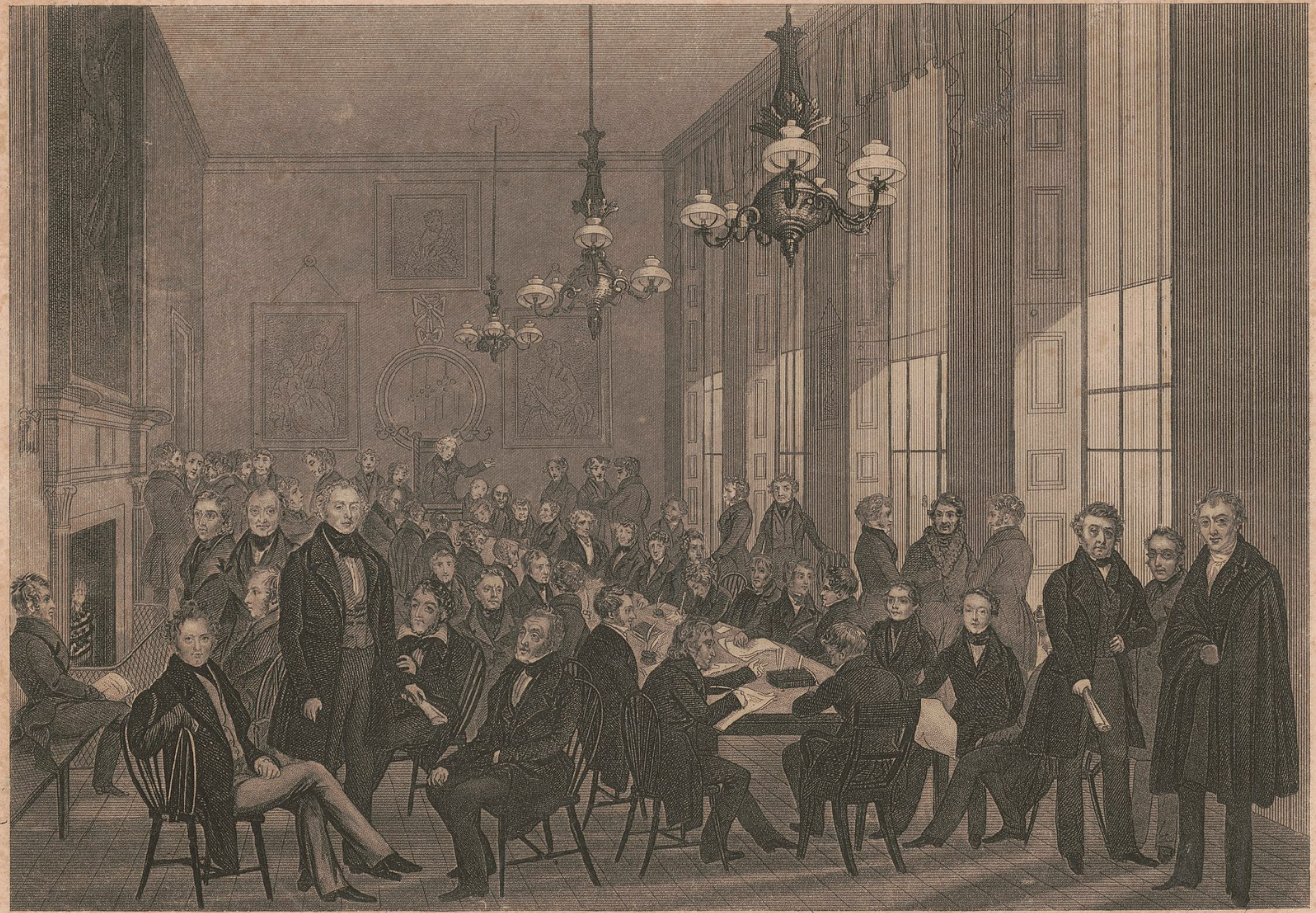
Delegates to the first Chartist convention, meeting
at the British Coffee House, 4 February 1839.
The latest batch includes the names of all those elected as delegates to the General Convention of the Industrious Classes (the first convention) in 1839, whether or not they took up their seats.

I have also added the officers and councils of both the Carlisle Radical Association and the Carlisle Female Radical Association. Cumberland (as it then was) and Carlisle in particular are interesting Chartist centres, but to the best of my knowledge have not been properly studied. 

Friday, 5 April 2024

Chartists and special constables: the Cumberland magistrates' embarrassing mistake

In the summer of 1839, as tensions ran high amid rumours of general strikes and armed risings, and the Chartists of Cumberland held threatening moonlit meetings, the mayor of Carlisle and the county’s magistrates decided to activate plans to swear in hundreds of special constables.

By the start of August, they could claim to have 195 specials organised into nine sections in Carlisle alone, each led by a ‘summoning constable’ able to mobilise their men in the event of ‘tumult, riot or fire’ under the overall command of the magistrates assembled at the town hall.

Monday, 1 April 2024

The rise and fall of the tumultuous John Dover

John Dover was a ‘noisy fellow’, a man accustomed to causing trouble on behalf of Norwich’s dominant Whig faction… if they paid him enough. But when Chartism came along, he found a cause where he could really make himself heard - to the immense annoyance of his former allies.

Dover specialised in making a nuisance of himself at public meetings called by the city’s mayor and high sheriff, highjacking their efforts to showcase the county’s elite at their genteel political best, and using them as a forum in which to argue for the Charter and other radical causes. And as a freeman of the city, there was little the authorities could do to stop him.

But Dover, a silk weaver turned beer-house keeper and other things besides, had a weakness: never good with money, he found himself in front of the magistrates for unpaid debts on a number of occasions. And it was to be his chronic shortage of cash that did for him in the end.

In the 1841 general election he sold out the Chartist cause for a £50 bribe (or, at least, was entrapped into doing so) and nearly paid with his life. And three years’ later, after stolen silk was discovered at his home, he found himself facing a long, unwelcome sea voyage.

The full story of John Dover can be found on the Chartist Ancestors website.

Friday, 22 March 2024

In search of Helen Macfarlane: the elusive ‘shooting star’ of Chartism

Red Antigone: The Life and World of Helen Macfarlane, by David Black (BPC Publishers, 2024)

On a spring day in 1860, parishioners at the tiny fourteenth-century church at Baddiley, deep in the heart of the Cheshire countryside, gathered for the funeral of the vicar’s wife. Helen Edwards had died after a short illness aged just 41, and was laid to rest in the churchyard at St Michael’s in a peaceful spot in the shade of a large and now quite ancient tree.